
Tending God’s lovely creation

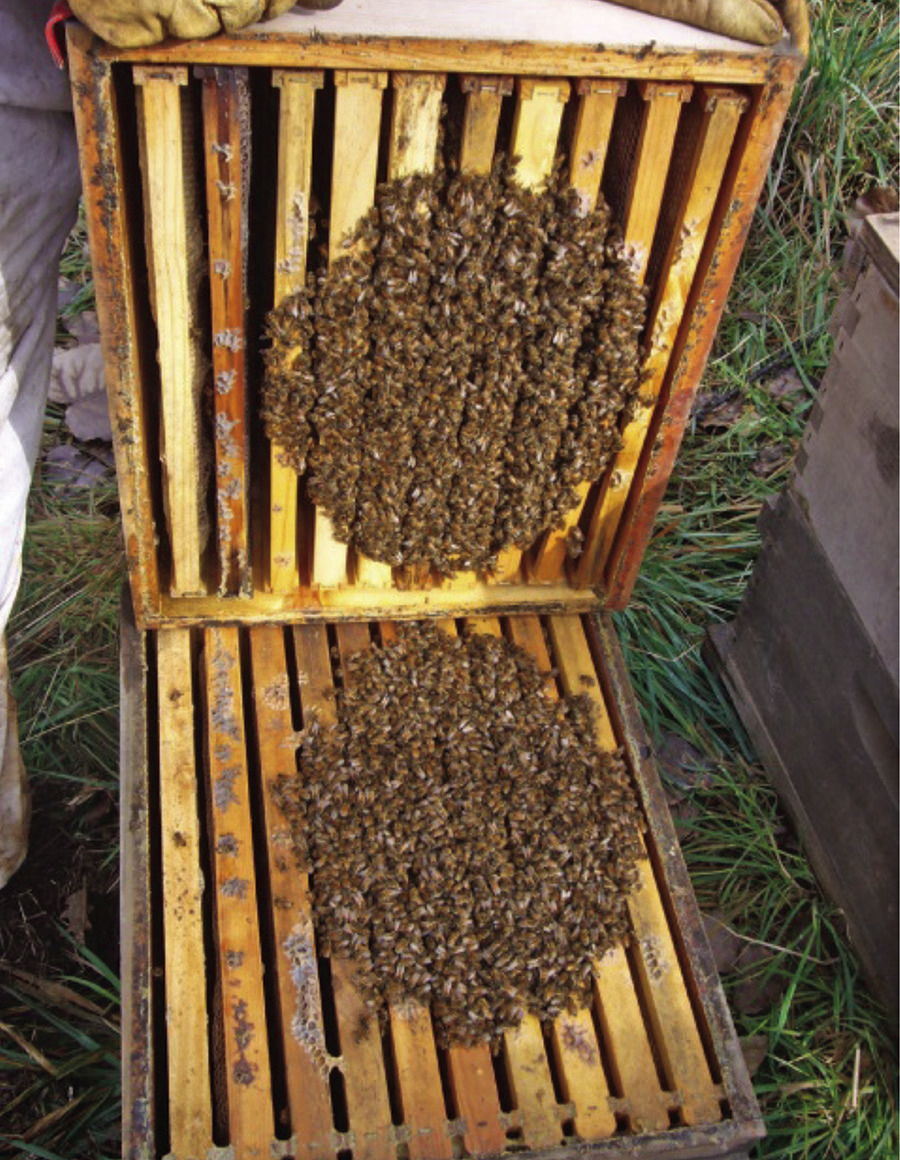
When someone finds out that we are beekeepers, they typically want to know how the bees survived the recent 5 degF weather. There is great care and concern in their voice, knowing how important honeybees are to our food supply. Our answer is always the same. “They’re eating honey and staying warm!”
Honeybees are, in our opinion, the most fascinating of all God’s insect critters. The versatile and adaptable honeybee is found everywhere in the world except Antarctica. Every day, as the sun comes up in the spring, the honeybee colony begins thinking again about surviving winter. Honeybees collect nectar from flowers and bring it back to the colony. Bees enzymatically transform the nectar, approximately 20% sugar in water, and dry it to 82% sugar and only 18% water. The bees store this as honey for their food when nectar (from flowers) is no longer available in the environment, as happens every winter.
Honeybees do stay warm in winter but they do not heat their whole hive box. Rather, they gather into a loose cluster of bees, consume stored honey, and shiver their flight muscles to produce heat. It’s the same reaction we humans have when we are cold; we begin to involuntarily shiver. Honeybee muscles stop working about 50 degF. Hence, the bees keep the outside of the cluster about 55 degF and the center at 91-93 degF. There is a whole lot of shaking going on (sorry Jerry Lee Lewis) in the cluster as the temperature drops. The colder it is outside, the tighter the cluster. Picture penguins in Antarctica keeping warm in the winter and you’ll get the idea.
Metabolizing all that honey to heat the cluster produces a lot of moisture in the hive. Think about the exhaust that comes from your car’s tailpipe on a cold morning. Have you seen the condensed water coming out as the warm engine exhaust hits the cold metal? Same thing for the bees. They digest sugar converting it to carbon dioxide and water to create heat. Any moisture in the hive will condense and “rain” on the bees. Unfortunately, a wet bee is a dead bee during the winter. To allow moisture to escape, many beekeepers will actually have open screens on the bottom of their hives and prop the top of the hive open to facilitate ventilation, even when it is very cold outside. Remember, honeybees heat the ball of bees (cluster) and not the entire hive box.
Honeybees do not make new bees during the winter months. Instead, they keep the source of eggs and stored sperm, their queen, warm and fed at the center of that cluster. They all know that if they don’t exit winter with a living, mated, and laying queen, their colony will not survive. Without a laying queen the bees will all reach old age in April and die off. Queen survival is of paramount importance to every single honeybee in the colony…and every beekeeper in the world!
Our honeybees are in south Titus County. When the outside temperature dropped to minus 5 degF, during the 2021 winter, how did our bees do? Just fine. They simply formed a tight cluster, ate honey, and stayed warm. The bees started spring 2021 in such fantastic shape that we were able to have a good honey harvest and to produce 15 new honeybee colonies for other beekeepers. The 2022 summer drought was another challenge for local honeybees.
God designed honeybees to very adaptable generalists, able to change their plans according to what is going on in the environment. It must be working, since we’ve had honeybees on the earth since before the Noahic flood described in the Bible book, Genesis.
“What are the honeybees doing right now?,” you ask. – They are consuming honey, staying warm, keeping their queen viable, and preparing for the spring blossom season, which is just fine with us!